|
|
|
|
NOVEMBER PROGRAM
|
|
"Civil War Veterans, North and South, Who Served in the Khedive
of Egypt's Army"
|
Monday,
Nov. 9, 2026
Presenter: Jim Morgan
Gather at 6 p.m., Program begins at
6:30 p.m.
Jenkin's Hall Auditorium, The
Citadel
For Directions, Visit
Speakers/Meetings Page
Sponsored by The Citadel's Department of History |
|
|
|
Sign-Up NOW for FSCWRT Fall Field
Trip to
Wilmington, N.C., on Nov. 6 & 7!
|
 |

Chris E. Fonvielle, Jr.,
author of The Wilmington
Campaign, Last Rays of Departing
Hope (1997),
will
conduct the fall tour.
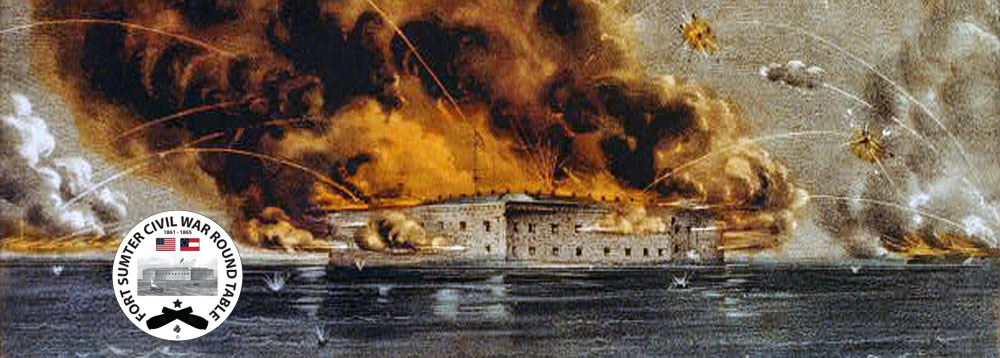
Shown above is a painting of the
second Battle of Fort Fisher
(Jan. 13 - 16, 1865),
a Union victory and part of of
the Wilmington Campaign (Dec. 7,
1864 -
Feb. 22, 1865). |
|
|
|
Sign-Up in Two Quick & Easy
Steps:
1. Pay & register at
Eventbrite.
2. Then, reserve your room
ASAP
at
Hampton Inn.
NOTE:
Our special discounted rate
expired on Oct. 7. But
some FSCWRT members have used
other available discounts,
including their Hilton Honors
memberships, and received better
rates than they would ever find
in Charleston this time of the
year.
|
|
|
Members of the Fort Sumter Civil
War Round Table will be touring
Fort Fisher, "the Gibraltar of
the South," and its impressive
new museum as well as the
Confederate Sugar Loaf Line,
Fort Anderson and the Forks Road
Battlefield.
Saturday's guide will be Chris
Fonvielle, Jr., Ph.D., a native
Wilmingtonian and the author of
several books on coastal
defenses and blockade running in
Southeastern North Carolina.
He taught Civil War history at
the University of North Carolina
at Wilmington from 1996 until
his retirement in 2018.
We will be blessed with his
expert interpretation,
compelling storytelling and the
shared pleasure of exploring
history where it happened.
The $250.00 per person
registration fee covers a
catered reception Friday
night in the Bellamy Room at the
Hampton Inn downtown
Wilmington, a complete tour,
lunch and an evening banquet
dinner in a private room at the
historic Pilot House Restaurant.
Reserve a hotel room for Friday
and
Saturday nights. The
Hampton Inn at 225 Grace Street
in historic downtown Wilmington
is holding a block of rooms for
members of the FSCWRT at a
special discounted rate of $163
per night. If you collect
Hilton Hotel Honor points, it
just gets better. Because
Hampton Inn is now part of
Hilton Hotel's family of hotels,
you will be able to use your
Hilton Hotel Honor Points!
Please pay and register for this
great field trip, and reserve
your room soon at the special
discounted rate above while
rooms are available.
|
|
|
"First Strike: The
U.S. Navy in the Battle of Fort
Fisher, 1864"
Civil War
Navy -- The Magazine
Fall 2025 (Vol. 13, No. 2) |
Civil War Navy -- The
Magazine
has generously
provided copies of two excellent
articles on the first and second
battles of Fort Fisher, written
by Chris E. Fonvielle,
Jr., to post on this website.
Launched in 2012, this quarterly
magazine publishes in-depth
articles on naval aspects of the
Civil War, and highlights the
military role and significance
of naval operations during the
conflict. For more
information, please visit: |
"Second Strike:
The U.S. Navy in the
Battle of Fort Fisher, 1865"
Civil War
Navy -- The Magazine
Winter 2026 (Vol. 13, No. 3)
|
|
www.CivilWarNavy.com |
|
|
|
North
Carolina Maritime Museum of Southport
Features Blockade Running Exhibit |
 |
|
|
|
|
PREVIOUS PROGRAM
|
|
"Fort Fisher and the Battle for Wilmington, N.C."
|
Oct. 12,
2026
Presenter: Chris Fonvielle, Jr., Ph.D.
SPECIAL MEETING LOCATION: Washington Light Infantry Building
287 Meeting St., Charleston, S.C.
Sponsored by The Citadel's Department of History |
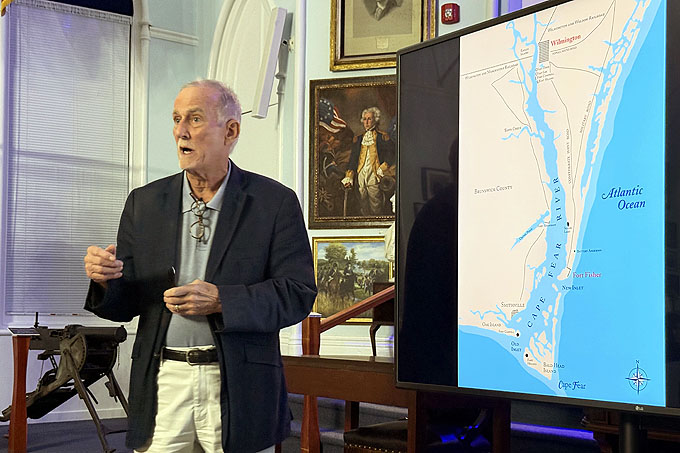
Chris Fonvielle, Jr., Ph.D.
Speaker |
|
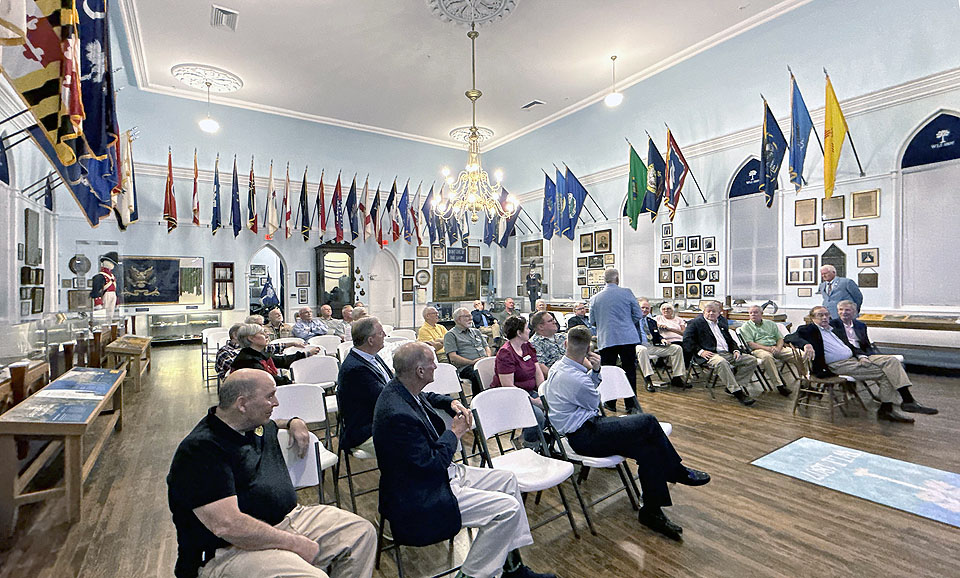
Chris
Fonvielle, Jr., Ph.D., a native
Wilmingtonian and the author of
several books on coastal
defenses and blockade running in
Southeastern North Carolina,
delivered and excellent program
on Monday, Oct. 12, on "Fort
Fisher and the Battle for
Wilmington, N.C." The
program was held at a special
location -- the Washington Light
Infantry Building, downtown
Charleston.
Immediately following his
presentation, Fonvielle fielded
questions from the audience.
Fonvielle, who taught Civil War history at
the University of North Carolina
at Wilmington from 1996 until
his retirement in 2018, will be
our guide for the Fort
Sumter Civil War Round Table's
upcoming Fall Field Trip on
November 6 & 7. (See
Above)
He received his B.A. in
Anthropology from the University
of North Carolina Wilmington,
and served as the last curator
of the Blockade Runners of the
Confederacy Museum in
Wilmington. Fonvielle then
received his M.A. in American
history from East Carolina
University and his Ph.D. from
the University of South
Carolina.
Charlie Fox, Washington Light
Infantry Historian, welcomed the
Fort Sumter Civil War Round
Table to October's presentation
at the Washington Light Infantry
Building in Charleston.
Cliff Roberts, President of the
FSCWRT, introduced the speaker
and provided an update on the
Round Table's activities.
Kyle Sinisi, Ex Officio Board
Member of the FSCWRT, talked
about plans for a Round Table
trip to Europe during 2027 to
visit World War II sites.
|
|
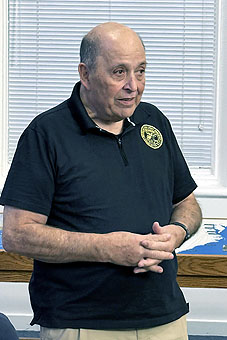
Charlie Fox
Washington Light Information
Historian and
FSCWRT Board Member |
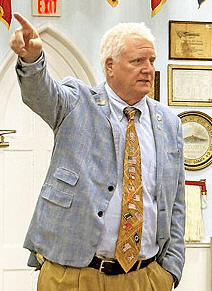
Cliff Roberts
FSCWRT President |
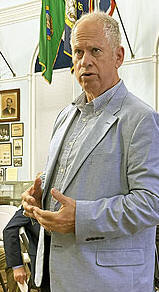
Kyle Sinisi
FSCWRT Ex Officio Board Member
and
Past President (2024) |
|
 |
|
Washington
Light Infantry Building, Auditorium, Charleston, Oct. 12, 2026 |
|
 |
Click here
to view photos of
past presentations and events. |
|
|
|
Support Friends of the National Parks |
|
As some of you may know,
several of the Fort Sumter Civil War Round Table members also are
associated with what, until recently, was called Fort Sumter-Fort
Moultrie Historical Trust. Not long ago, the Trust "rebranded,", i.e.,
changed its name to better represent what it does. The Trust is now Friends of Charleston National Parks. Its
mission is to help the National Park Service protect and preserve Fort
Sumter, Fort Moultrie, the Charles Pinckney National Historic Site (Snee
Farm Plantation), and the U.S. Coast Guard Historic District on
Sullivan's Island (the lighthouse and the old life-saving station that
are next to each other). With that in mind, Round Table board members are passing
along this information knowing that those who are interested in one
aspect of history often are interested in others. We encourage anyone
who wishes to do so to support Friends of Charleston National Parks.
For more information, visit:
https://friendofscnp.org
|
|
|
|
|
Follow the Fort Sumter Civil War Round Table on
Facebook |

|
|